Quick answer
The earliest signs of cash trouble are usually quiet: customers paying later, suppliers paid outside terms, tax set-asides being dipped into, and the owner not drawing a wage. business.gov.au and ASIC both list signs like these. A 20-minute monthly check of debtor days, creditor days, ATO balance, cash buffer and owner drawings catches most problems while a simple fix still works.
Key points
- Most business debt crises show warning signs months earlier.
- Track five numbers monthly: debtor days, creditor days, ATO balance, cash buffer, owner drawings.
- Dipping into GST or PAYG withholding to pay other bills is the biggest red flag.
- Acting at the first amber light keeps cheap fixes available.
Almost nobody wakes up to a director penalty notice out of a clear blue sky. Looking back, most owners can point to the moment it started: the month the big client began paying at 60 days, the quarter the GST account was “borrowed from” for payroll, the season they stopped paying themselves. The signs were there. They just weren’t being watched.
This guide is a routine for watching them — about 20 minutes a month, built on the warning signs that business.gov.au and ASIC describe, and designed so you see trouble when it’s still cheap to fix.
What do the official warning signs say?
business.gov.au groups warning signs into a few clusters. Paraphrasing:
- Cash flow: not knowing what’s coming in and going out, customers often paying late, finding it hard to pay suppliers or debts, and low profit margins.
- Profitability: not being able to pay yourself a salary, costs rising faster than profits, relying on borrowed money to keep operating, and difficulty getting investors or loans.
- Customers: falling sales, losing a major customer, more complaints or refund requests.
- People: high staff turnover and the costs that come with it.
ASIC’s guidance for directors adds ongoing losses, unpaid creditors outside usual terms, overdue taxes, incomplete financial records, and suppliers insisting on cash on delivery.
None of these alone means a business is failing. Together, and over time, they tell a story.
Which five numbers should I check every month?
Pick a fixed day — the 5th of each month works for many owners — and write down these five numbers.
| Number | How to work it out | Amber light | Red light |
|---|---|---|---|
| Debtor days | Money owed to you ÷ last month’s sales × 30 | Rising two months in a row | Well beyond your payment terms |
| Creditor days | Money you owe suppliers ÷ last month’s purchases × 30 | Creeping past supplier terms | Suppliers asking for cash on delivery |
| ATO balance | From ATO online services | Any overdue amount | Overdue for more than one BAS period |
| Cash buffer | Bank balance ÷ average weekly outgoings | Less than four weeks | Less than two weeks |
| Owner drawings | What you actually paid yourself | Reduced to keep the business going | Stopped entirely |
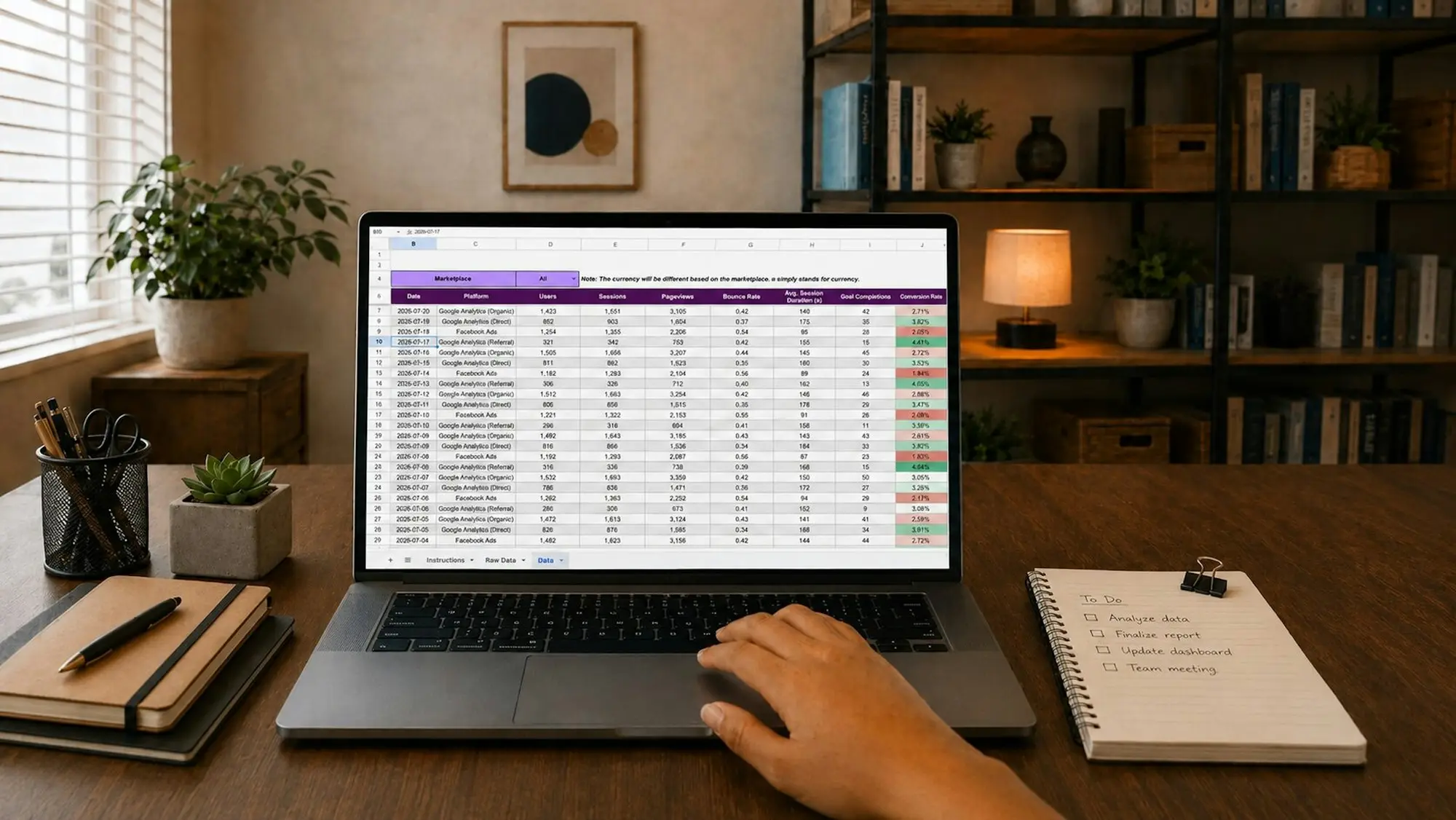
Put them in a simple spreadsheet with a column per month. The trend matters more than any single reading.
Why is dipping into tax money the biggest red flag?
Because it changes who owns the problem. GST, PAYG withholding and super guarantee charge are all covered by the director penalty regime. If the company doesn’t pay them and a director penalty notice goes unanswered for 21 days, directors can become personally liable.
So when GST collected from customers gets spent on wages or rent, the business is quietly converting a company problem into a personal one. It’s also usually the first step on the ATO’s escalation path. Our page on can’t pay your BAS explains what happens from there.
A simple fix: a separate bank account that receives a set percentage of every deposit for GST and withholding, and is never used for anything else.
What should I do at the first amber light?
Early action is almost always small action:
- Debtor days rising? Tighten terms, call your slowest payers, invoice the day work is done, and consider deposits for larger jobs.
- Creditor days stretching? Call suppliers before they call you, and agree revised terms in writing.
- Any ATO balance overdue? Lodge on time regardless, then pay or set up a plan. Online plans are available for debts of $200,000 or less.
- Cash buffer thin? Look at a line of credit before you need it. It’s far easier to arrange with clean statements.
- Owner drawings cut? Ask whether the business model still works at current prices and costs.
If a timing gap is the real issue — the work is profitable, the money just arrives late — short-term funding can bridge it cheaply. It’s worth seeing what you’d qualify for while your statements still look healthy; there’s no credit check in asking.
What does a red light mean?
A red light isn’t a verdict. It’s a signal to act this week, not next month:
- List every debt and deadline. Our which-debt-first sorter turns the list into an order.
- Talk to your accountant about the whole picture, not just the next BAS.
- Speak to key creditors with a specific, written plan.
- Look at funding routes — a consolidation, a second mortgage or an unsecured facility — while you still have choices.
- Get advice if you suspect insolvency. Directors have duties, and there are protections for those who act early.
Our ATO debt help page is a good next read if tax is part of the picture.
An illustrative example
Illustrative only. A Geelong joinery business runs the five-number check for the first time in March. Debtor days have climbed from 35 to 58 over three months as a builder client slows payments. Creditor days are drifting too, and the GST account has been drawn on twice for timber. Nothing is overdue with the ATO yet.
The owner acts that week. He calls the builder and agrees a payment schedule, puts deposits on all new jobs, and arranges a modest unsecured line of credit based on the business’s turnover. The GST account is topped back up and quarantined. By June, debtor days are back in the 40s and the BAS is paid on time. No letters, no deadlines, no drama.
Compare that with the same business six months later, if nothing had changed: an unpaid BAS, a supplier on stop, and a statutory demand on the desk. Same underlying problem — very different cost to fix.
How do I make the check stick?
- Diarise it. Same day each month, 20 minutes, non-negotiable.
- Share it. Send the five numbers to your accountant or business partner. Someone else seeing them keeps you honest.
- Keep records current. ASIC lists incomplete records as a warning sign in itself. Reconcile your accounts weekly.
- Review your financial health yearly. business.gov.au has a yearly financial health review worth adding to your EOFY routine; our guide to a tax bill bigger than expected covers the EOFY side.
When should I talk to a funder?
Earlier than most people think. The best time to arrange a buffer is when the numbers are green, because lenders assess your bank statements and trading history. The second-best time is at the first amber light, while there are no ATO letters and suppliers are still on normal terms.
Owners who wait until red often still have options — this whole site is about those options — but the list gets shorter and the process gets more urgent.
What does a healthy month look like?
For balance, here’s the green version of the five numbers: debtor days at or below your payment terms, suppliers paid within their terms, no overdue ATO balance, a cash buffer of several weeks of outgoings, and owner drawings paid as planned. You don’t need all five perfect every month. You need to know which ones aren’t, and why.
Seeing amber lights already?
If your monthly check has turned up a trend you don’t like, this is the cheapest moment to deal with it. A small facility now can stop a large problem later, and we’re happy to talk it through before anything formal arrives.
It takes about a minute to enquire, and no credit check happens when you first make contact. We don’t blast your details to a panel of lenders; one person looks at your business and calls you. Please be accurate about turnover, what’s owed and what’s owing to you, so we can suggest the right tool rather than the biggest loan.
Frequently asked questions
What are the first signs a small business is in financial trouble?
business.gov.au lists signs such as customers often paying late, finding it hard to pay suppliers or debts, low profit margins, not being able to pay yourself a salary, and relying on borrowed funds to keep operating. ASIC adds overdue taxes and suppliers demanding cash on delivery.
How often should I check my business cash flow?
business.gov.au recommends reviewing your finances weekly. A deeper monthly check of a few key numbers, like the one in this guide, is a practical minimum for most owners.
What is the most dangerous warning sign?
Using GST, PAYG withholding or super money to pay other bills. Those amounts can become a director's personal liability through a director penalty notice, so the problem stops being only the company's.
What should I do if several warning signs appear?
Act while there's still time: talk to your accountant, chase debtors, speak to key creditors, and look at funding options such as a line of credit or a consolidation before any formal letters arrive.
Is it normal to have some red flags?
Yes. Every business has a slow month. What matters is the trend: several amber signs lasting two or three months, or any red sign, deserves action.